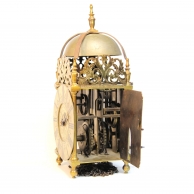
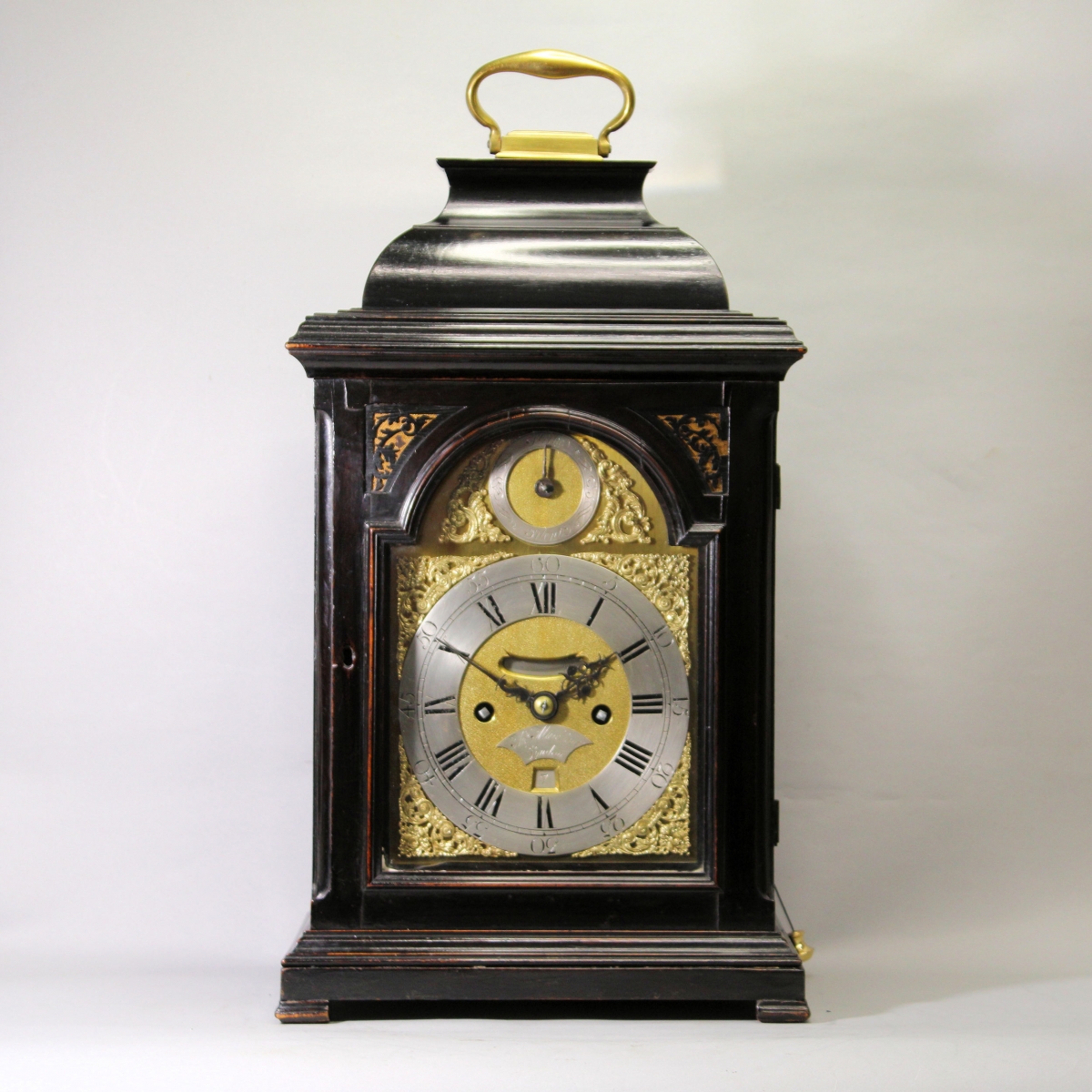
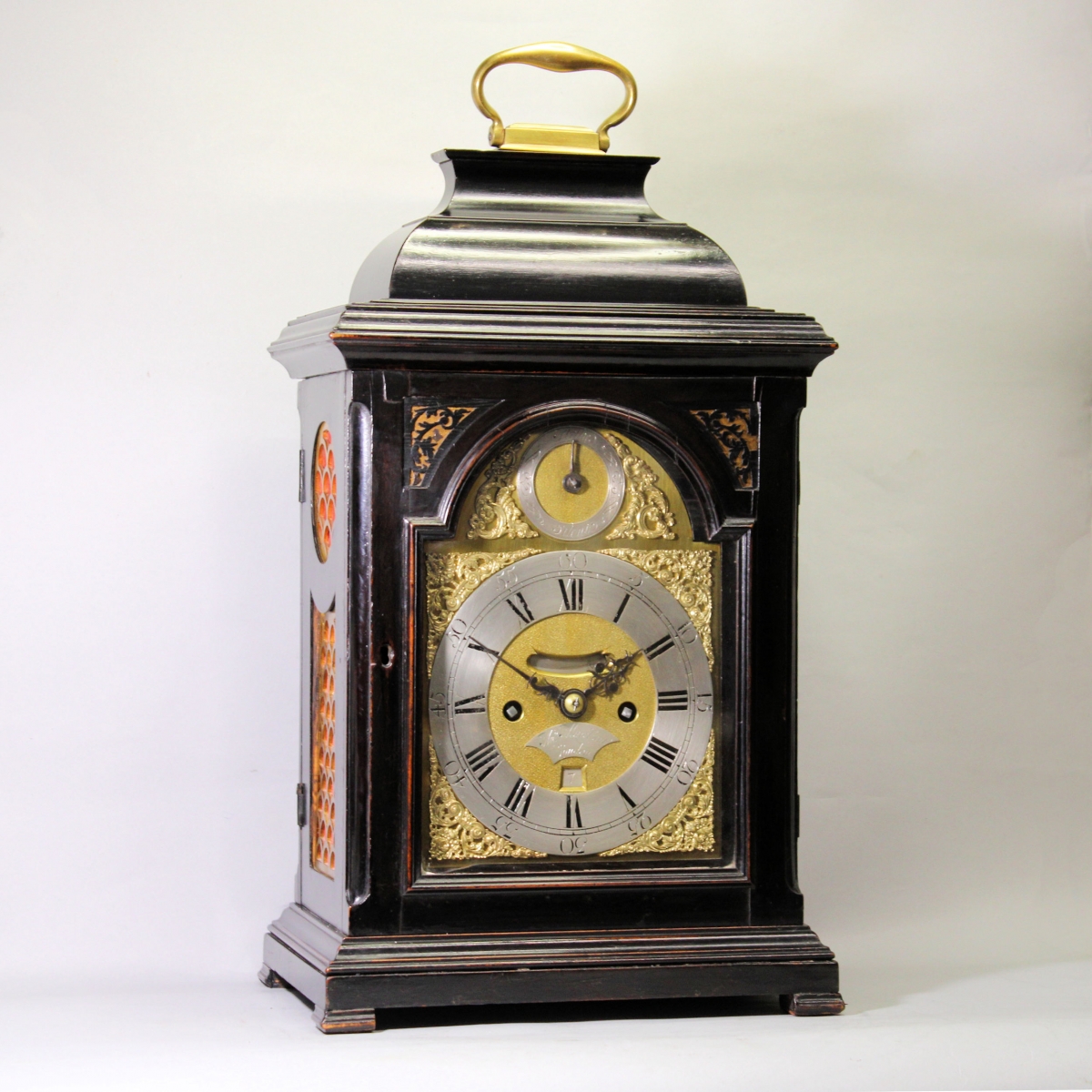
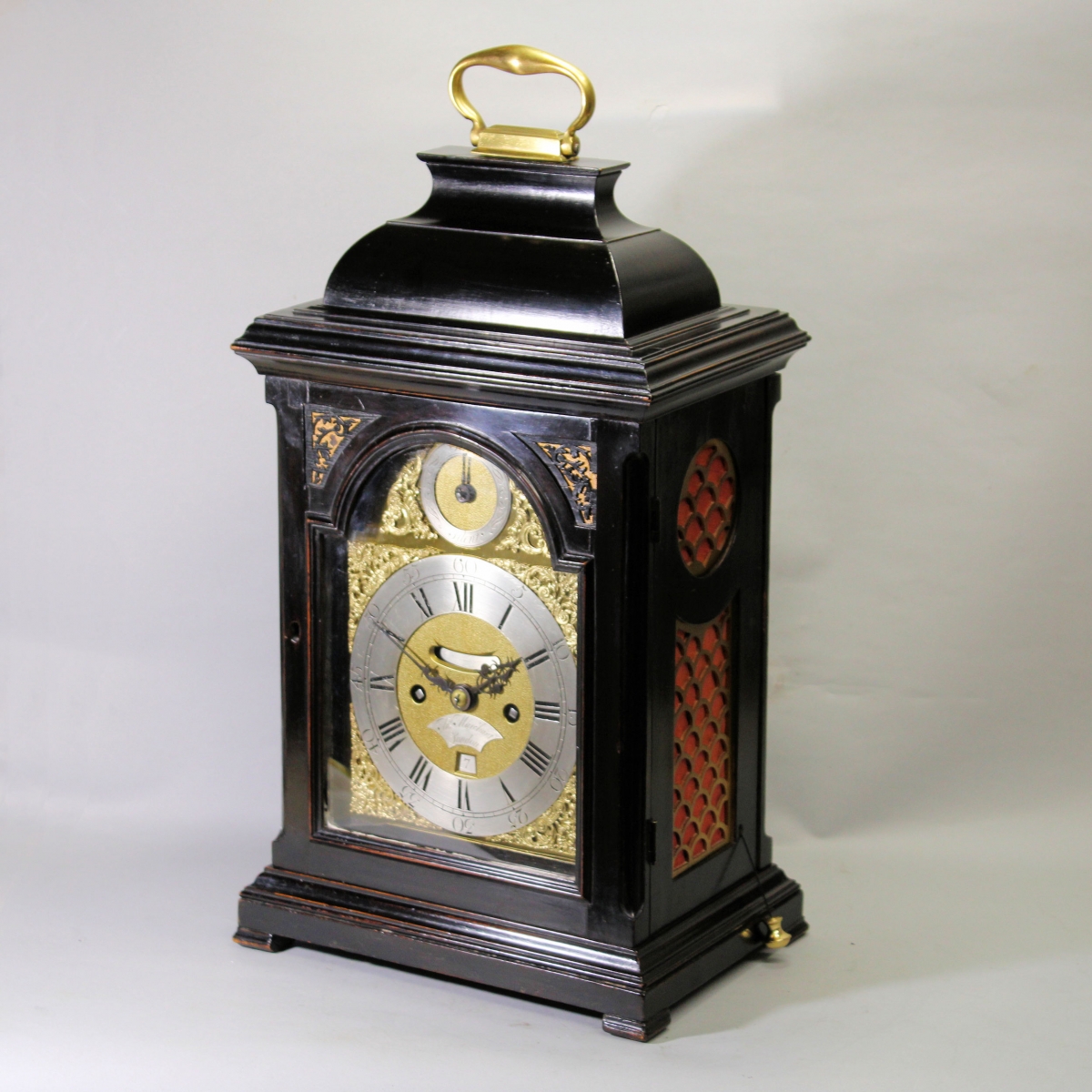
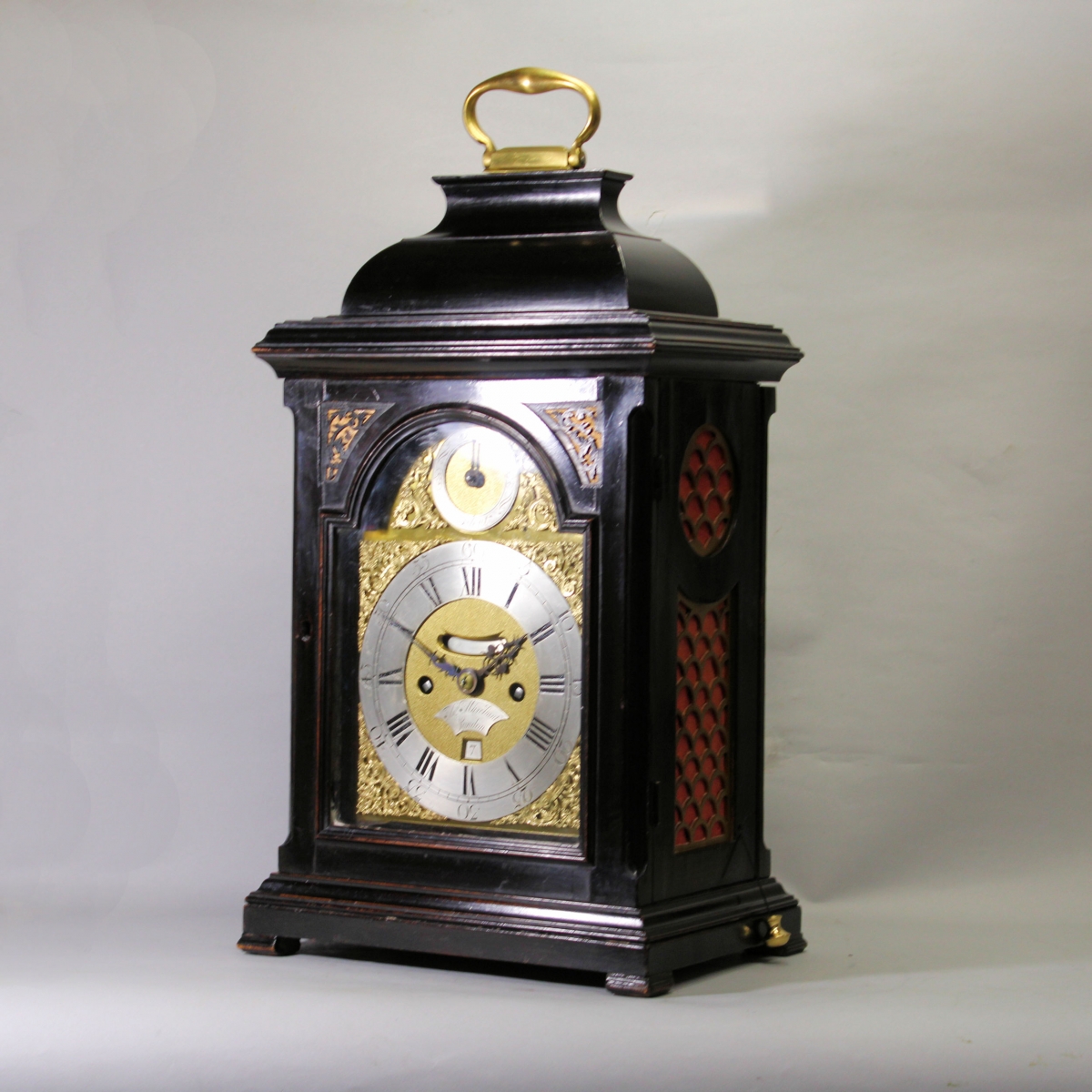
A good and slightly smaller, quarter repeating, verge escapement bracket clock by Andrew Marchant of London. Circa 1745.
A superior and very original example of an inverted bell top, ebonised table clock.
Stock No: 14499
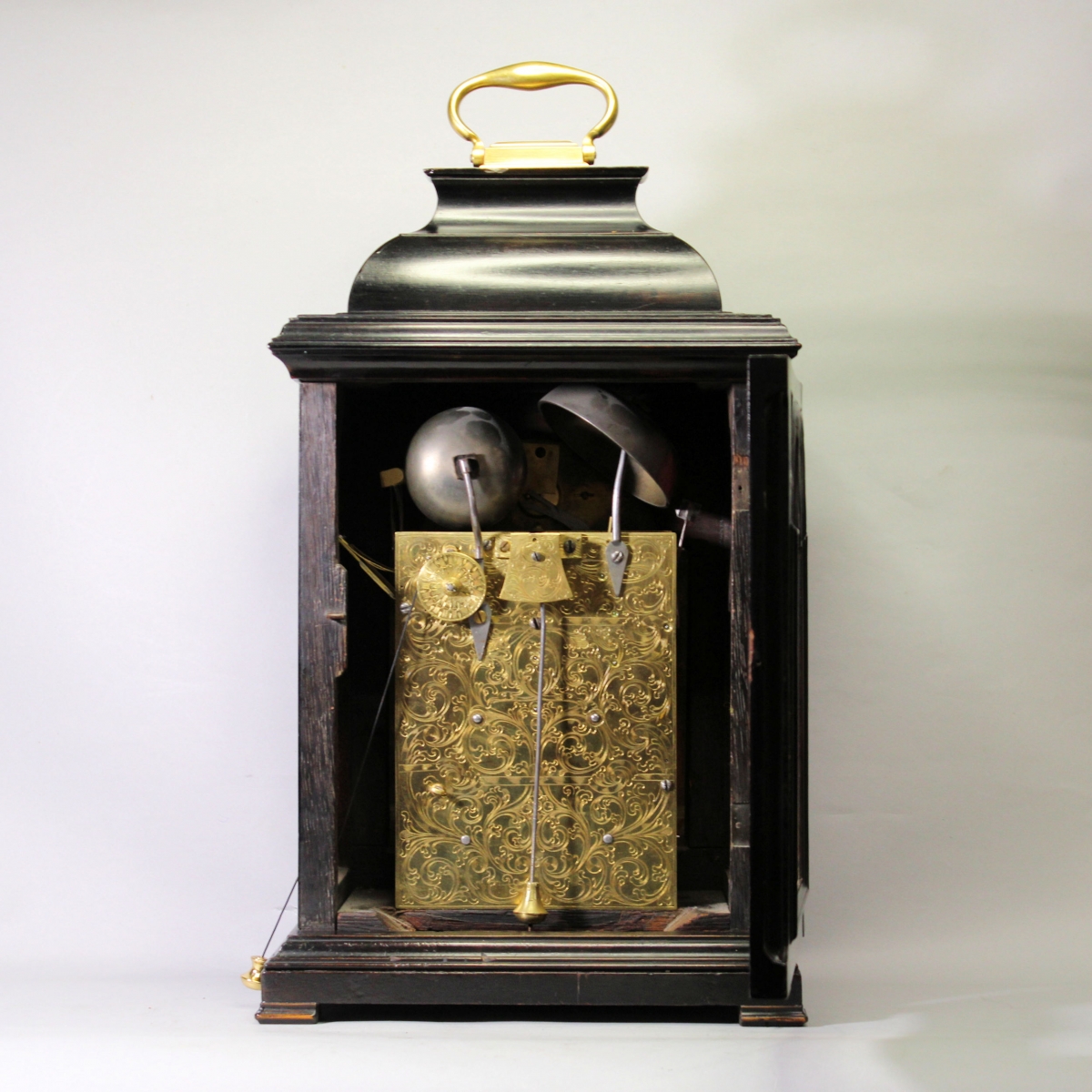
The eight day duration, five pillar, double fusee movement with attached pendulum verge escapement and rack and star wheel striking the hours on a large top-mounted bell. Also having strike/silent, pull hour and quarter repeating on a nest of a further 6 bells and calendar datework. The substantial backplate, backcock, apron and quarter pull wheel are all profusely engraved with early floral Rococo design and a lined border. The peardrop pendulum transit hook is also particularly beautifully made. The movement is held in place with 2 base bolts.
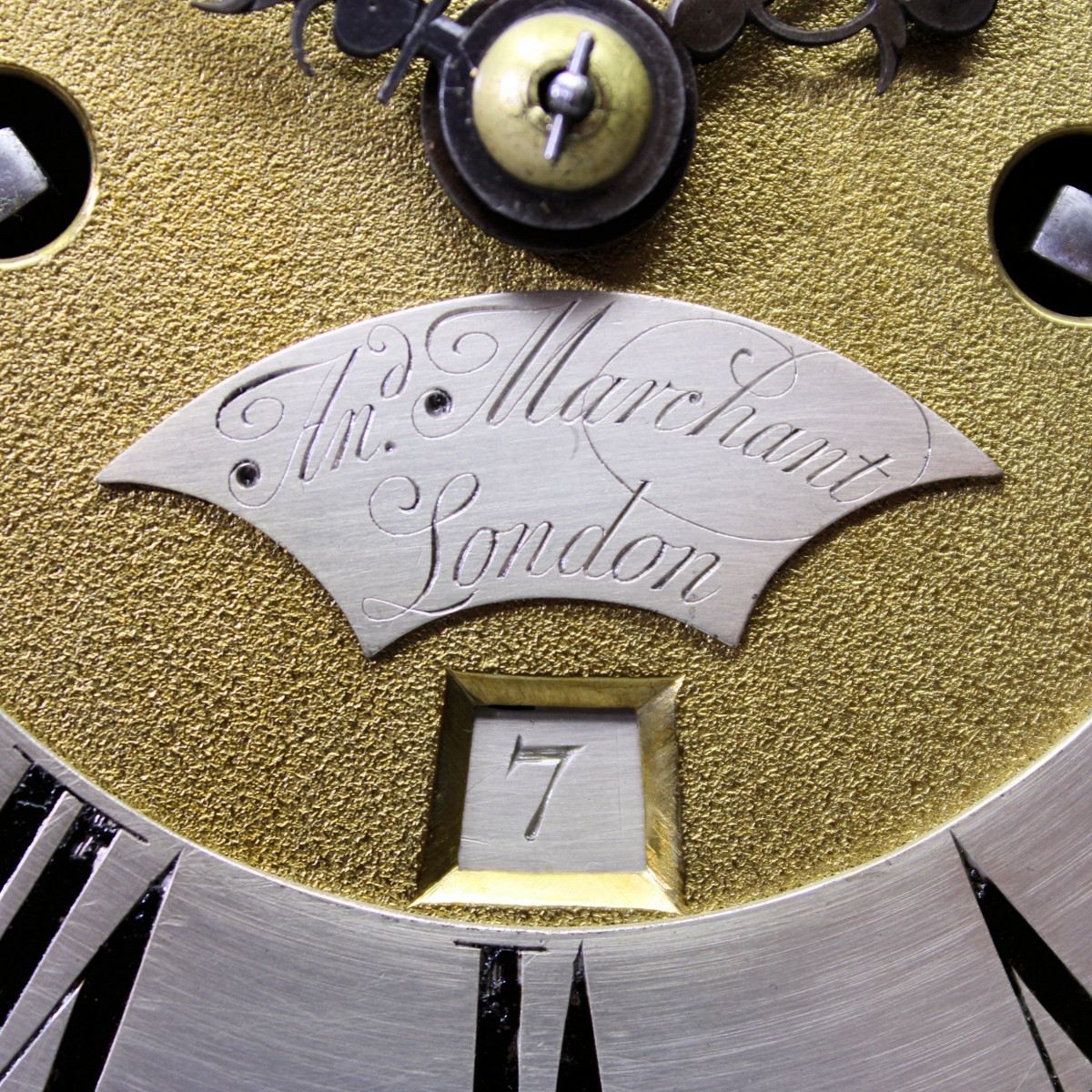
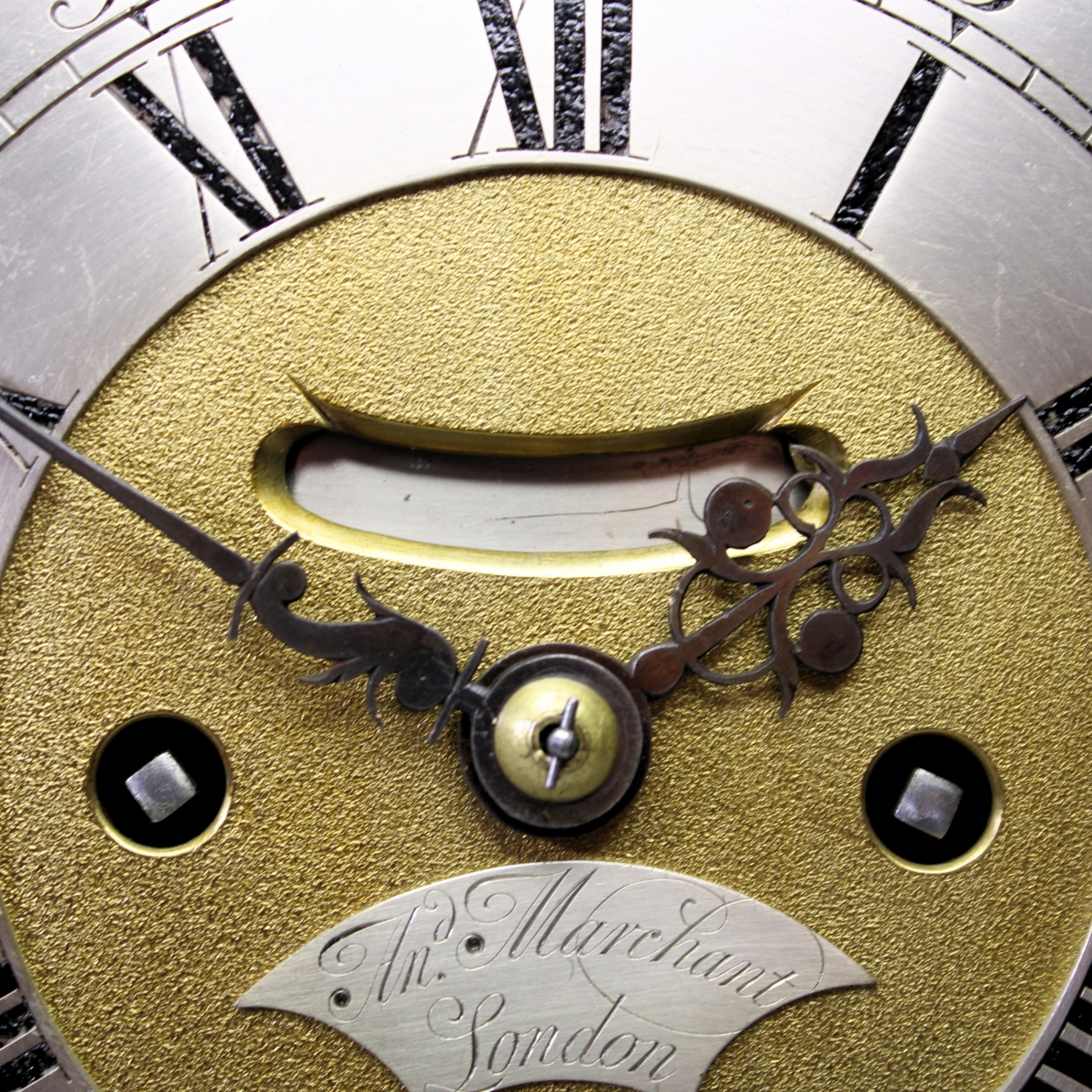
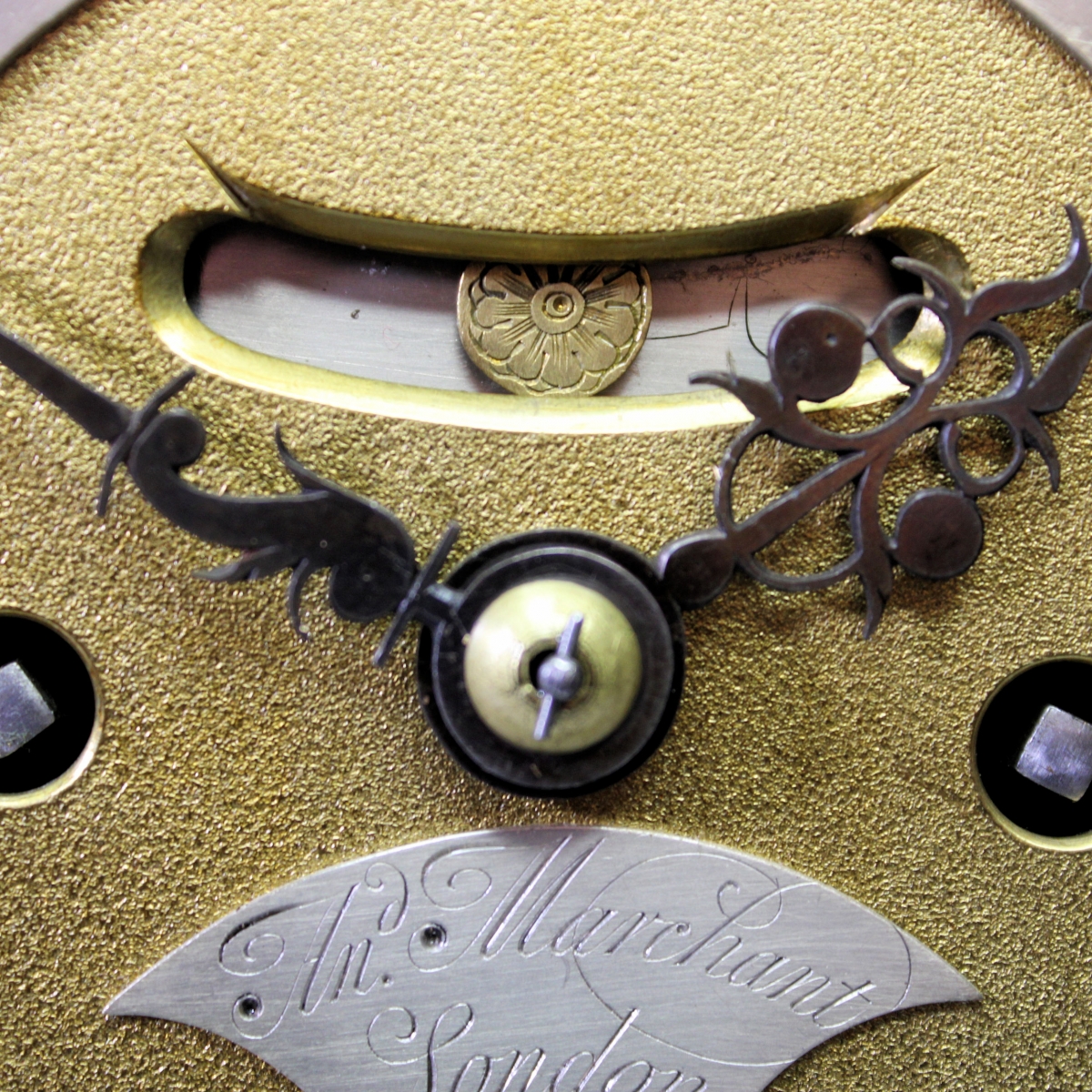
Behind a small 5 7/8" wide, brass break-arch dial with early Rococo style cast brass corner and arch spandrels, finely matted chapter centres to the silvered strike/silent chapter ring in the arch and the main silvered chapter ring with large outer, Arabic fives, minute track and inner Roman hour numerals. The lower dial centre having a nicely executed, curved and silvered maker's name plate bearing "An.d(rew) Marchant" (of) "London" in fine, script. Below this is a square and chamfered calendar date aperture. Above the centre is a curved and chamfered 'false pendulum' aperture with a silvered backplate, the circular bob is engraved with a rose design. The blued steel hands are finely pierced with a 'poker' selector hand to the arch for the strike/silent.
In an ebonised fruitwood veneered oak case with an inverted bell top on which is mounted a cast brass, swinging carrying handle. The return-moulded top sits over the full-sized locking front door that has quadrant sound frets to the upper arch sides. The side apertures retain their original, tall, inverted-arched, cast brass 'fish scale' sound frets that sit below round frets and are backed with red cloth. The rear of the case has a rectangular and glazed locking door. The short plinth has all-round concave top moulding and short block feet to the corners. The repeat pull exits from the right side.
Andrew Marchant is recorded as working from Gerrand Street and prior to 1762.
* Originally, these clocks could be carefully carried from room to room still ticking as to not lose any time because of their very robust 'Verge' escapement with attached pendulum or more importantly, to the bed chamber at night whereas the silent option would be selected so the sleeper would not be awoken at each and every hour. If the time was required then the repeat cord would be tugged and the previous hour and quarters would be sounded.
** I would like to explain a few points as to why (though unrestored) this clock is a better example than is usual; It is smaller than usual making it more appealing to the eye, the quality and amount of engraving is a pleasure to behold, the dial matting is very well executed, the originality including the verge escapement and also, the complicated, expensively made and functioning quarter work....to name a few!
Dimensions: 18 1/4" high including the handle x 10" wide x 7" deep.
Circa: 1745.
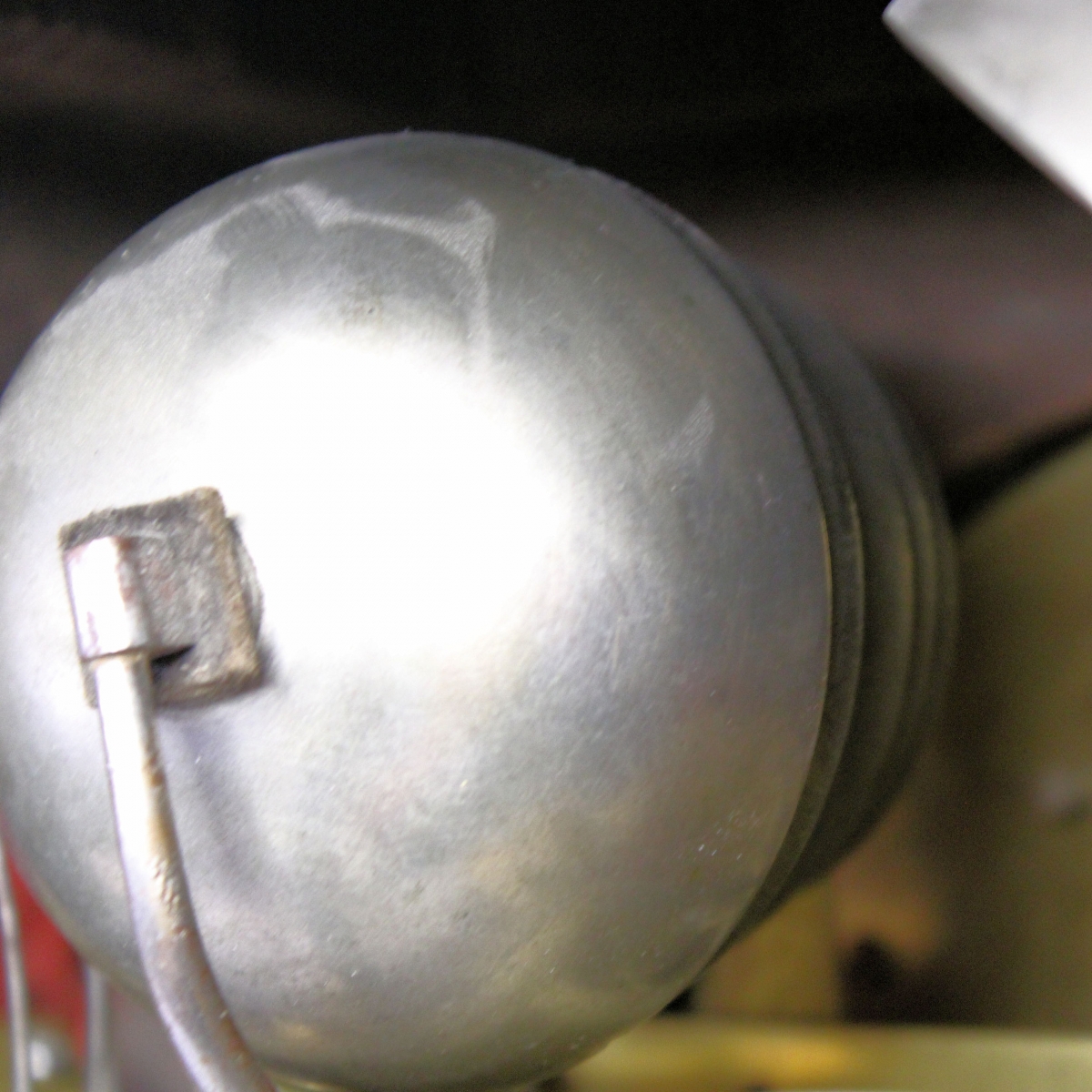
Condition: The movement is complete, fully working and keeping time. The crown wheel
has broken at some stage and been soldered back together (see picture). It has
been maintained historically but would benefit from a carefully carried out
restoration; it has mis-matched screws, the rear fusee bushes are not engraved
(which I would do) etc. and other minor issues.
The dial has areas of missing or bubbled wax from the engraving but otherwise
is crisp however, this too would benefit from a careful restoration and
re-waxing.
The case is very tired, there are small pieces of wood missing such as around
the dial and the front door lock is missing, the ebonising is worn with the
fruitwood veneer showing through in areas that have been rubbed also, the fret
cloth is worn and faded. The case would also look stunning if repaired,
re-ebonised, re-clothed and a bespoke door lock made from antique metal.
If the above restoration was carried out then this clock would appear just as
fabulous as our other stock and would add considerable value as well as a
guarantee. The most important point however, is the originality on the whole.
Price: If this item is fully restored, to include the movement, dial and case the price will
be £12,500 however, it can be purchased in its present condition for £7,250. If
patience can be coped with then the difference in price for restoring 'your' clock
and buying it in restored condition will be considerable and worth the wait.






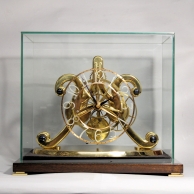
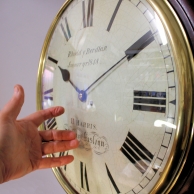
A 'Salt box' verge escapement, fusee, English dial wall clock by Upjohn of Exeter. Circa 1790.
View Details