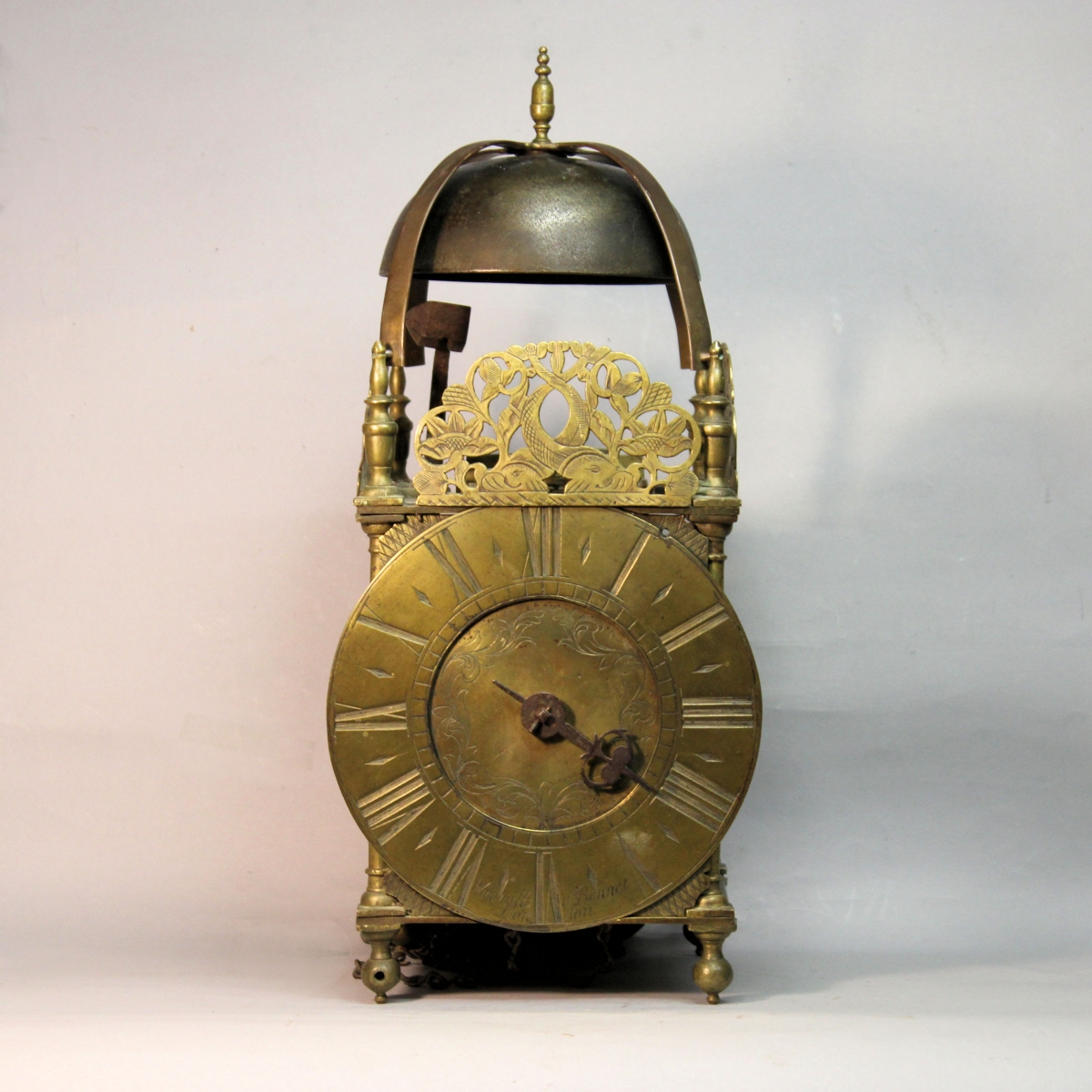
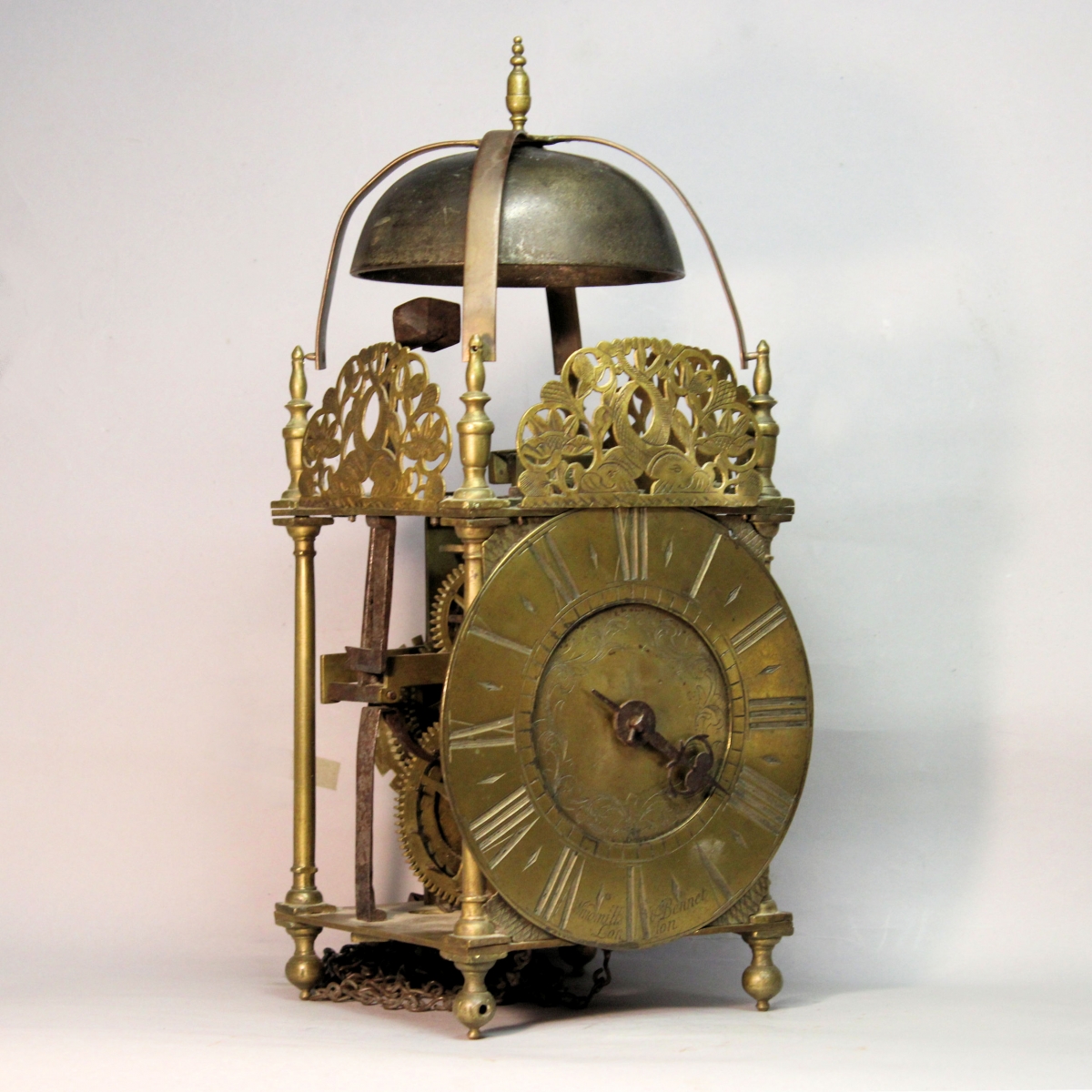
18th century lantern clock by Windmills & Bennet, London. Verge escapement, circa 1725.
A late example of a lantern clock by the prominent maker Thomas Windmills and his business partner, Thomas Bennet.
Stock No: 14533
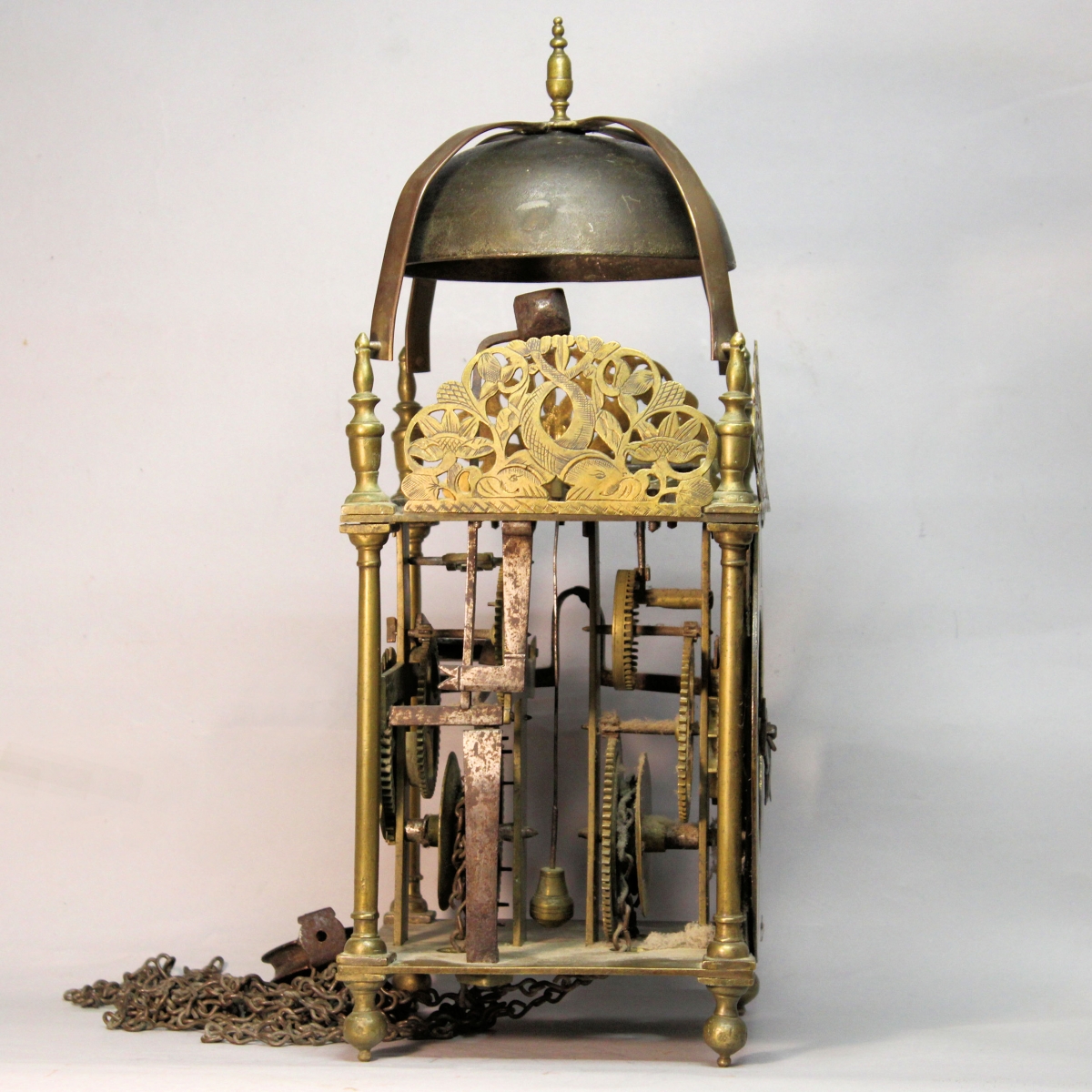
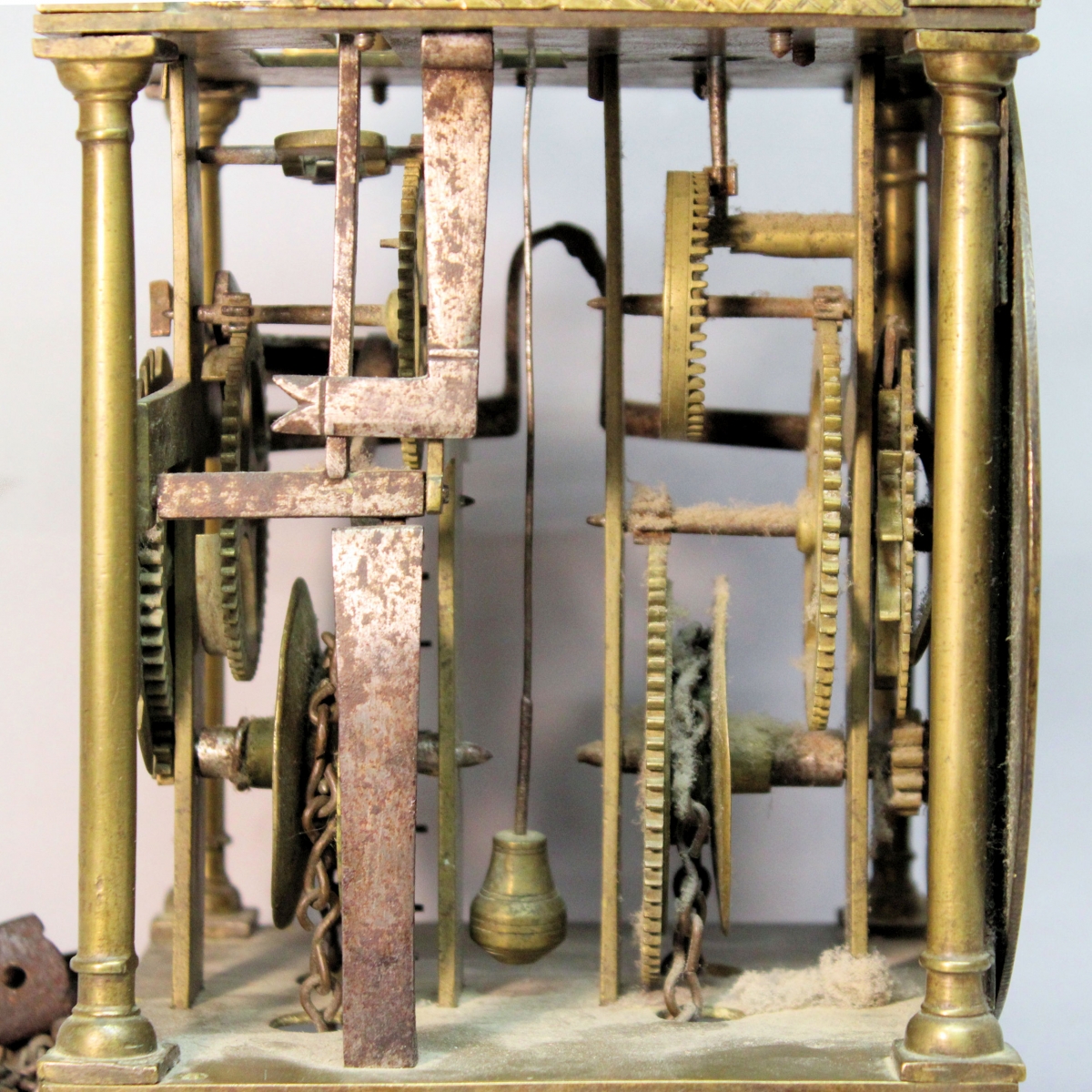
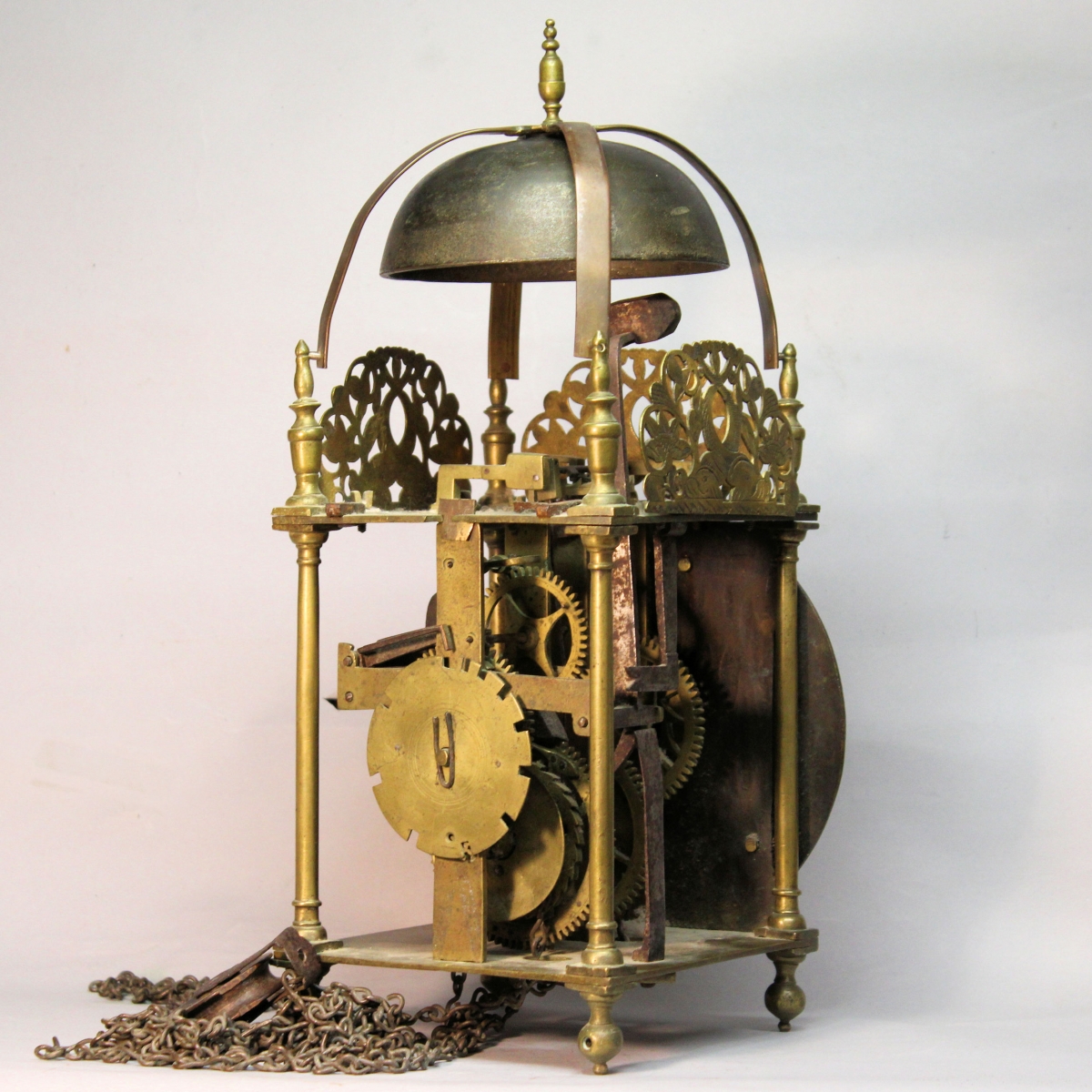
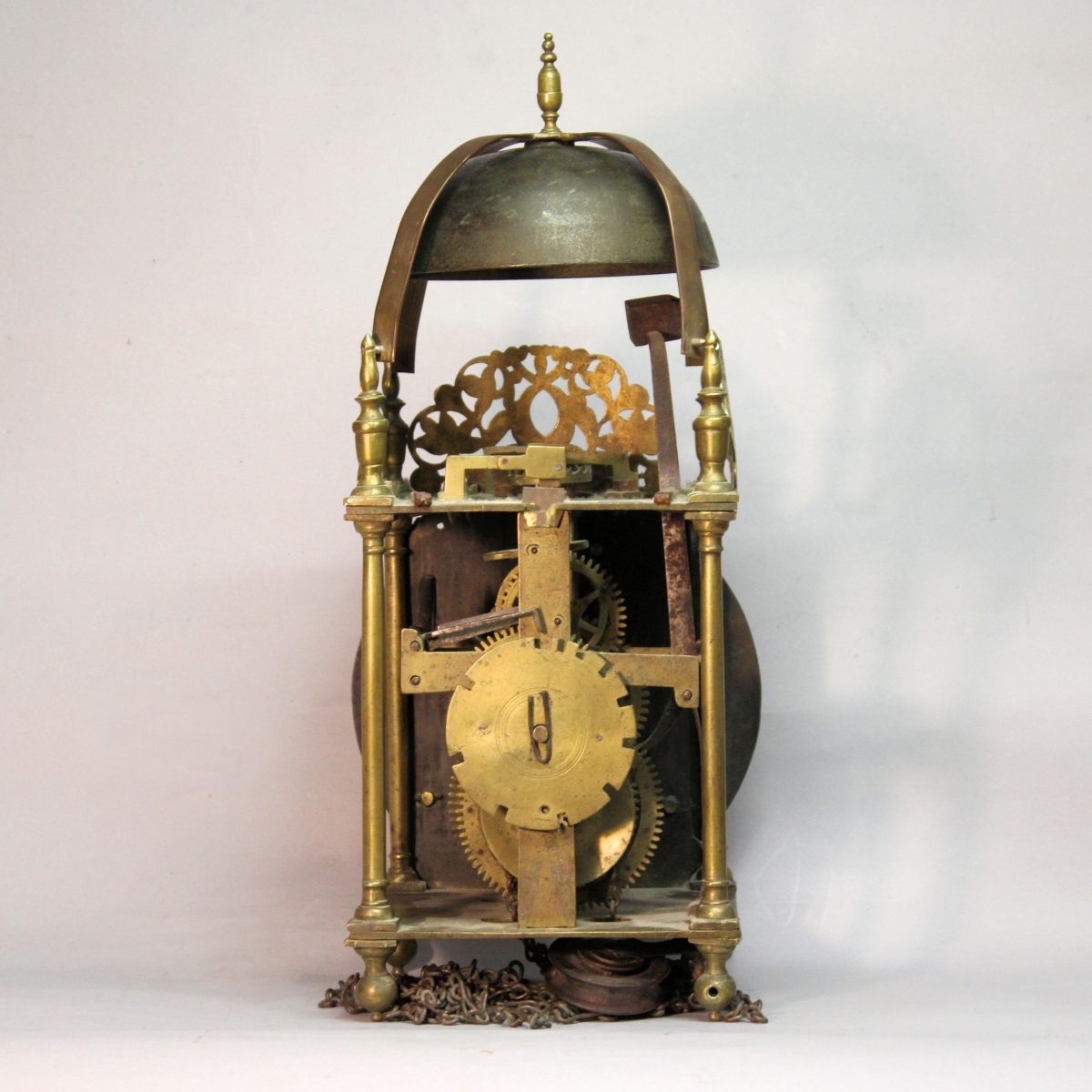
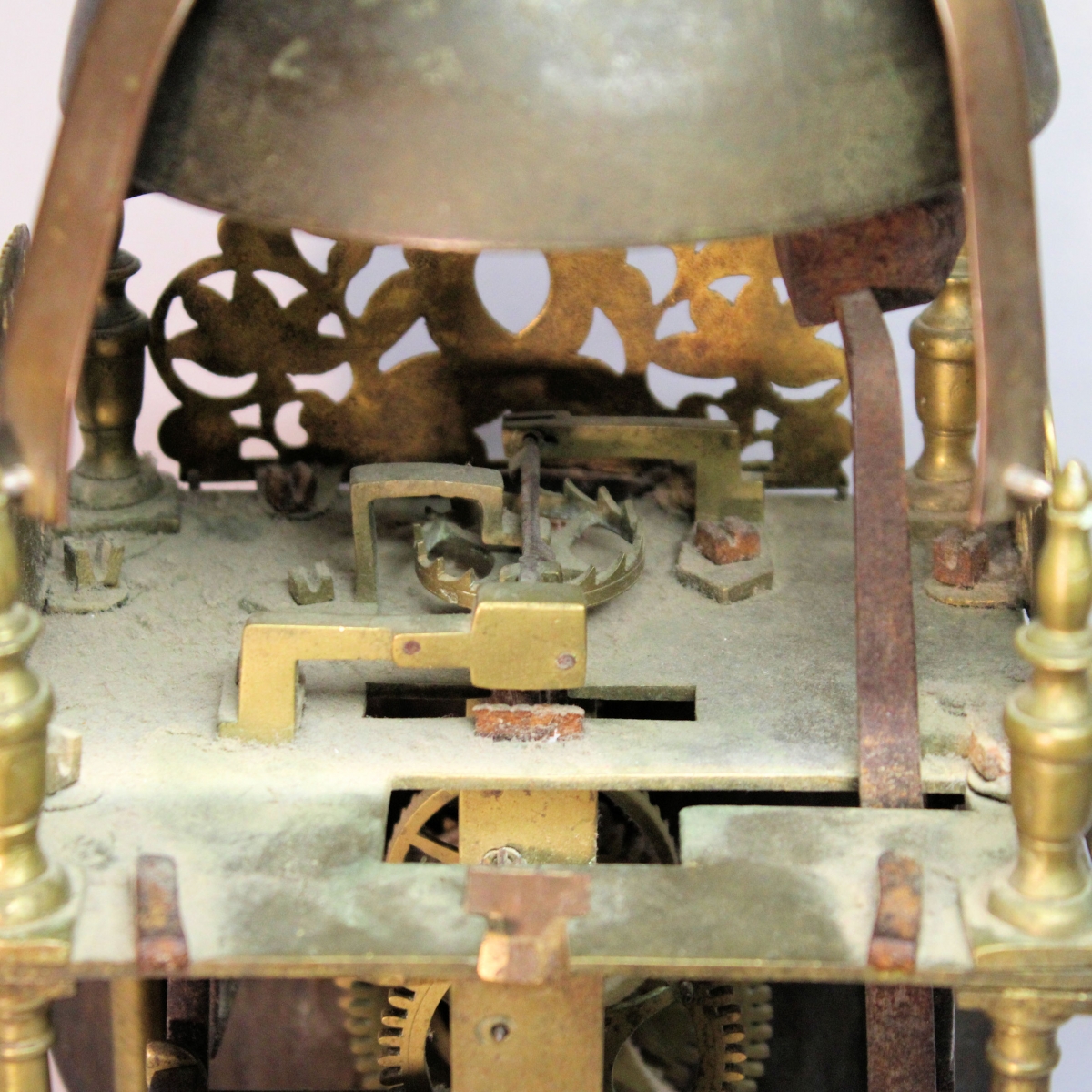
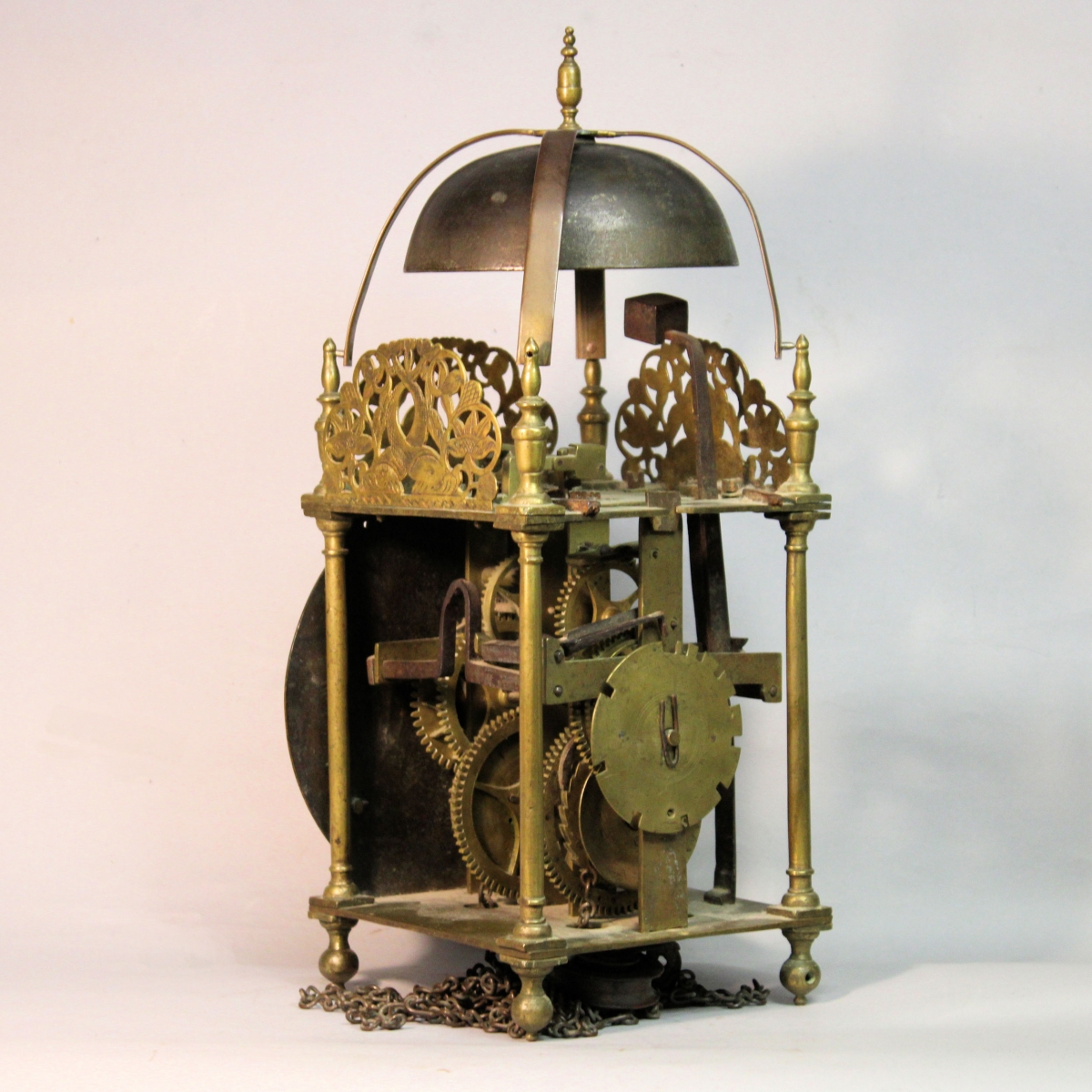
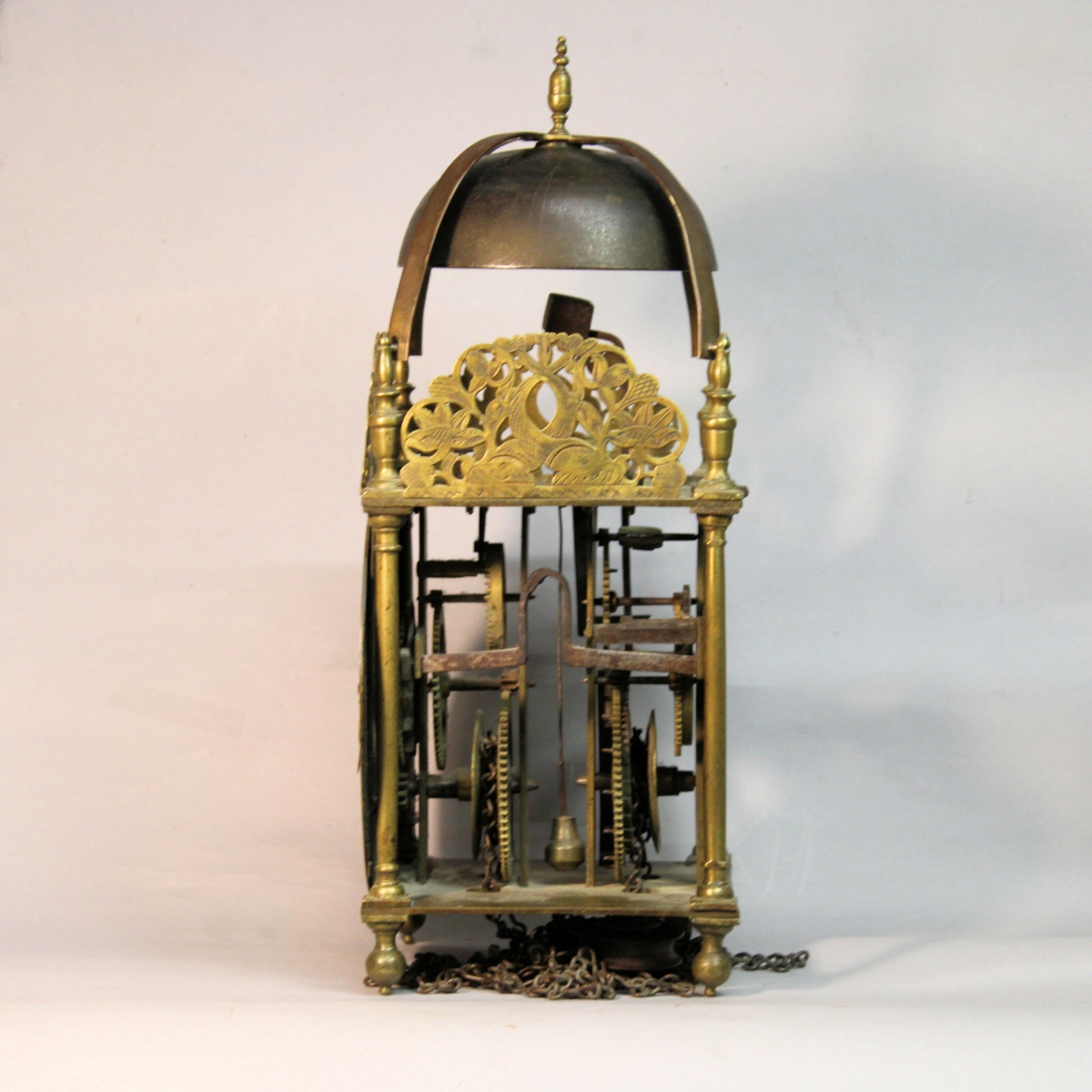
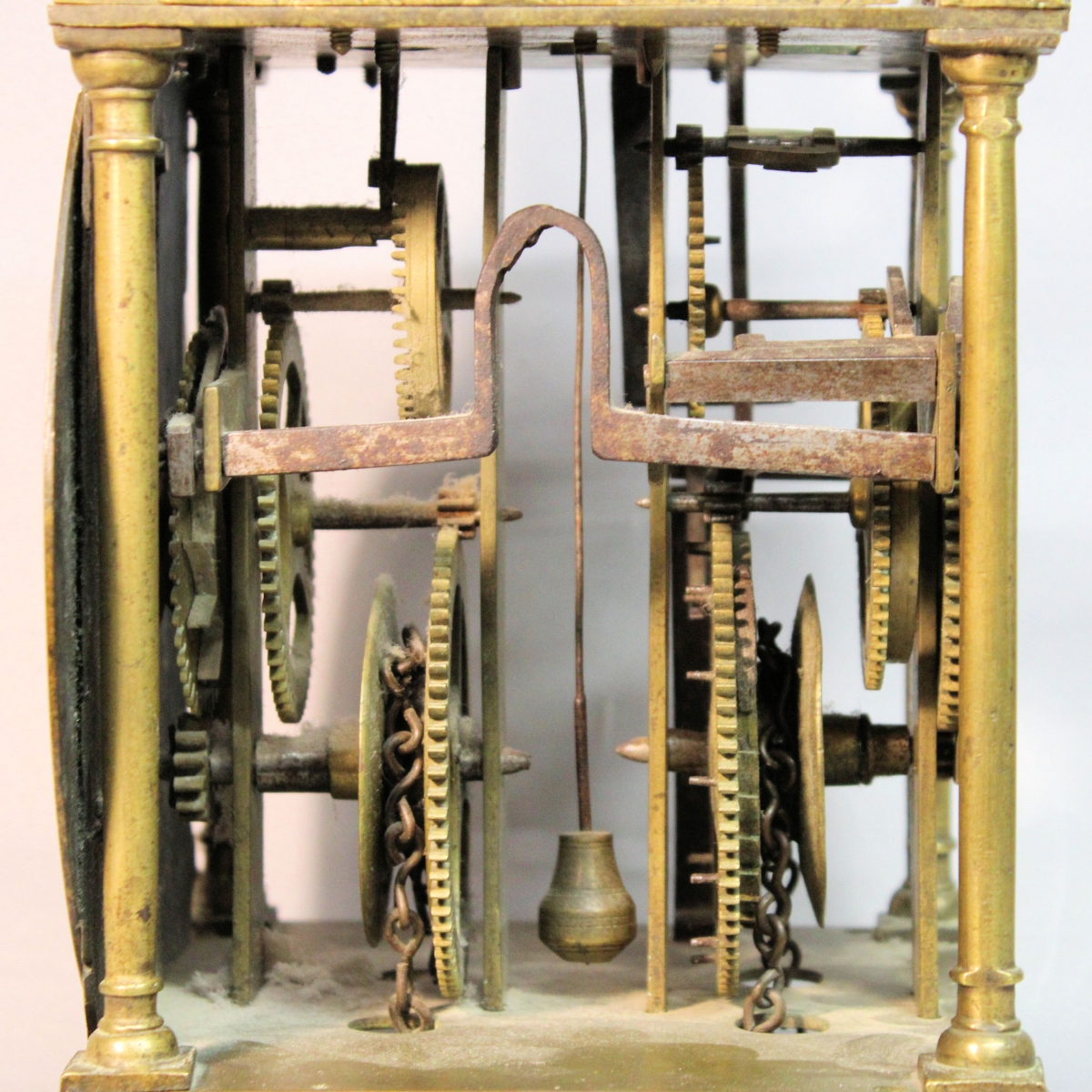
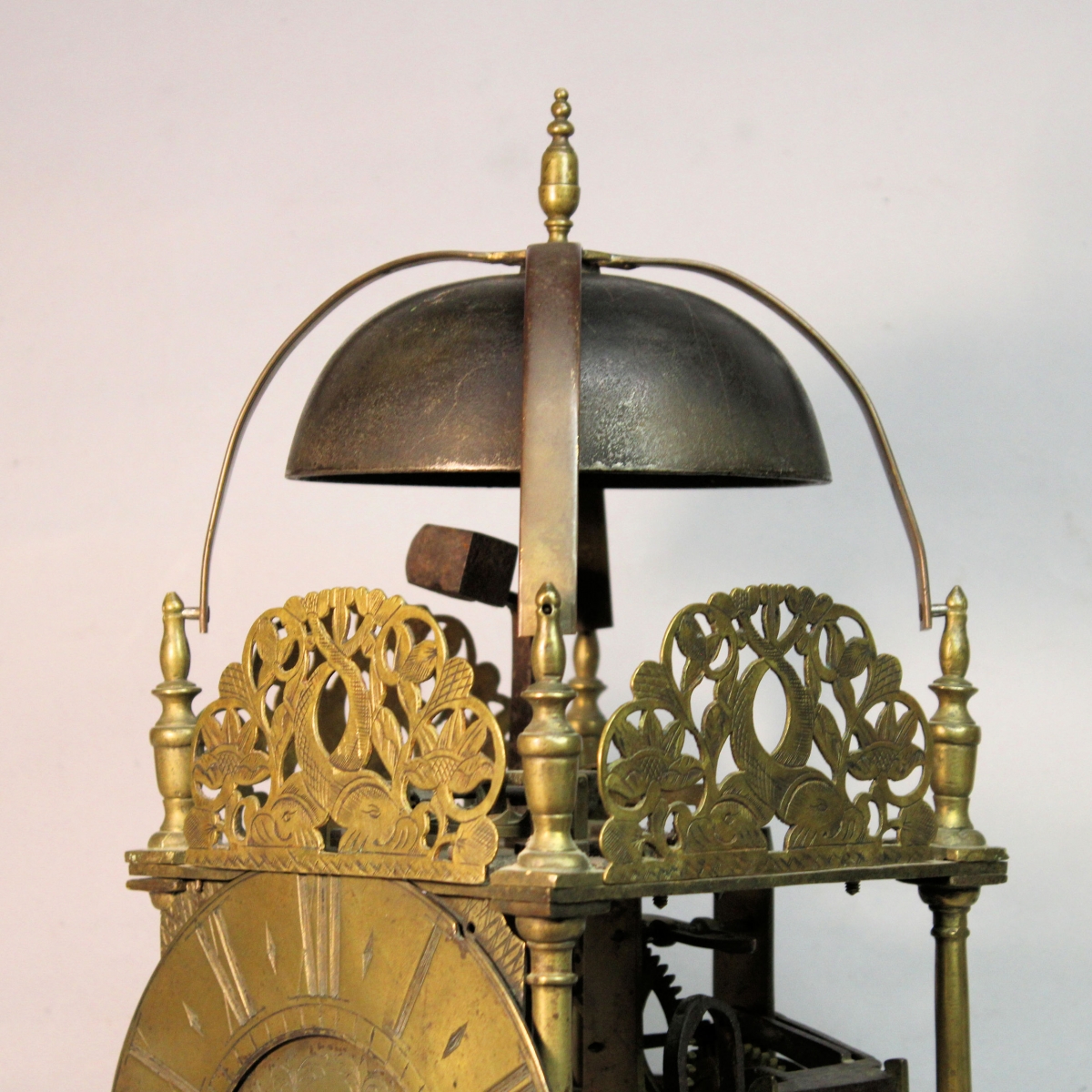
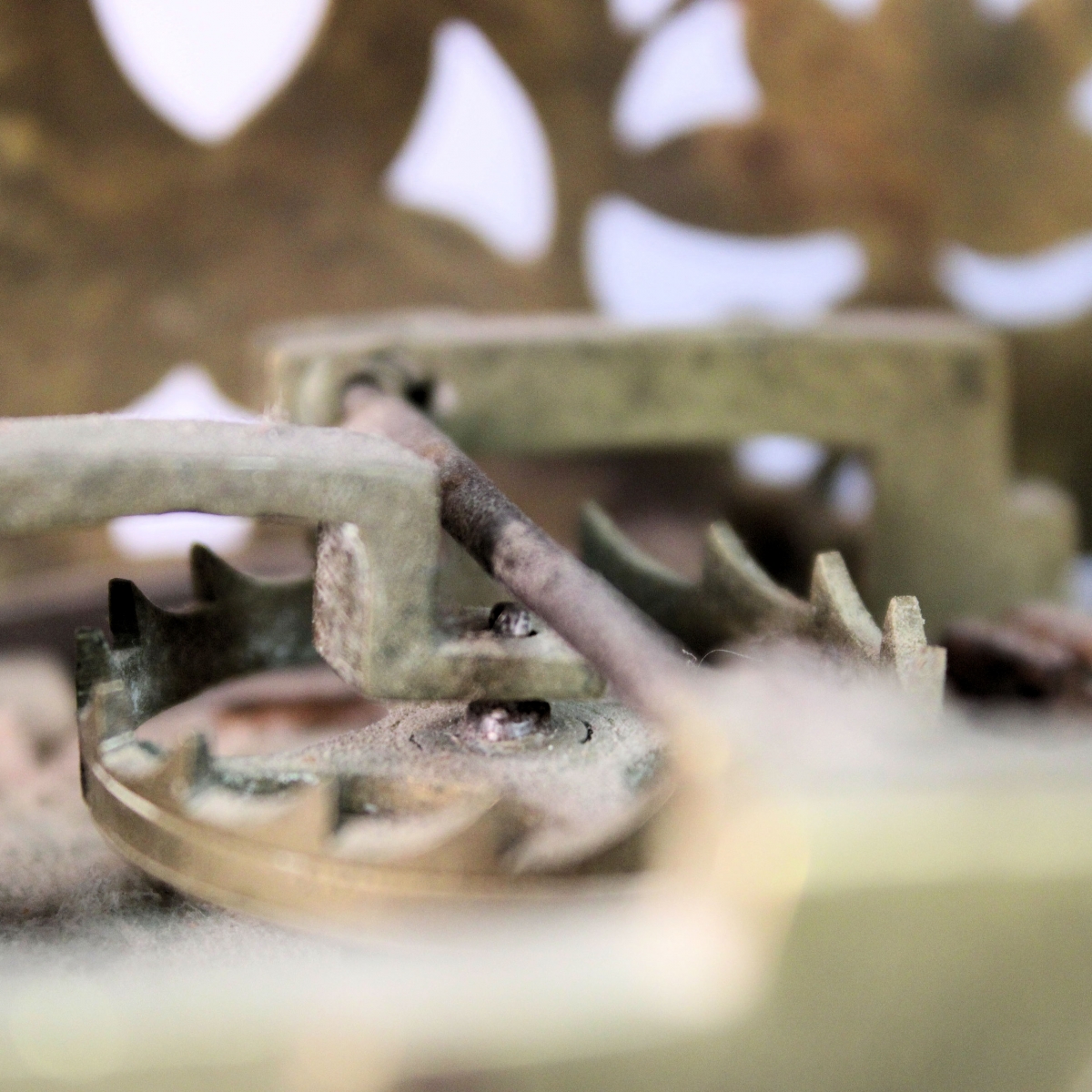
The 30 hour duration movement with Verge escapement. The short pendulum swings internally between the wheel trains that are pivoted within 4 upright narrow plates. These are held in place with lugs and wedges. Having countwheel striking of the hours on a top-mounted bell, held in place from a crossed carrier that in turn is sprung between the 4 top corner finials of urn shape. The movement is operated with the Huygens 'endless cord' method with the winding sprocket is fitted to the striking great wheel.
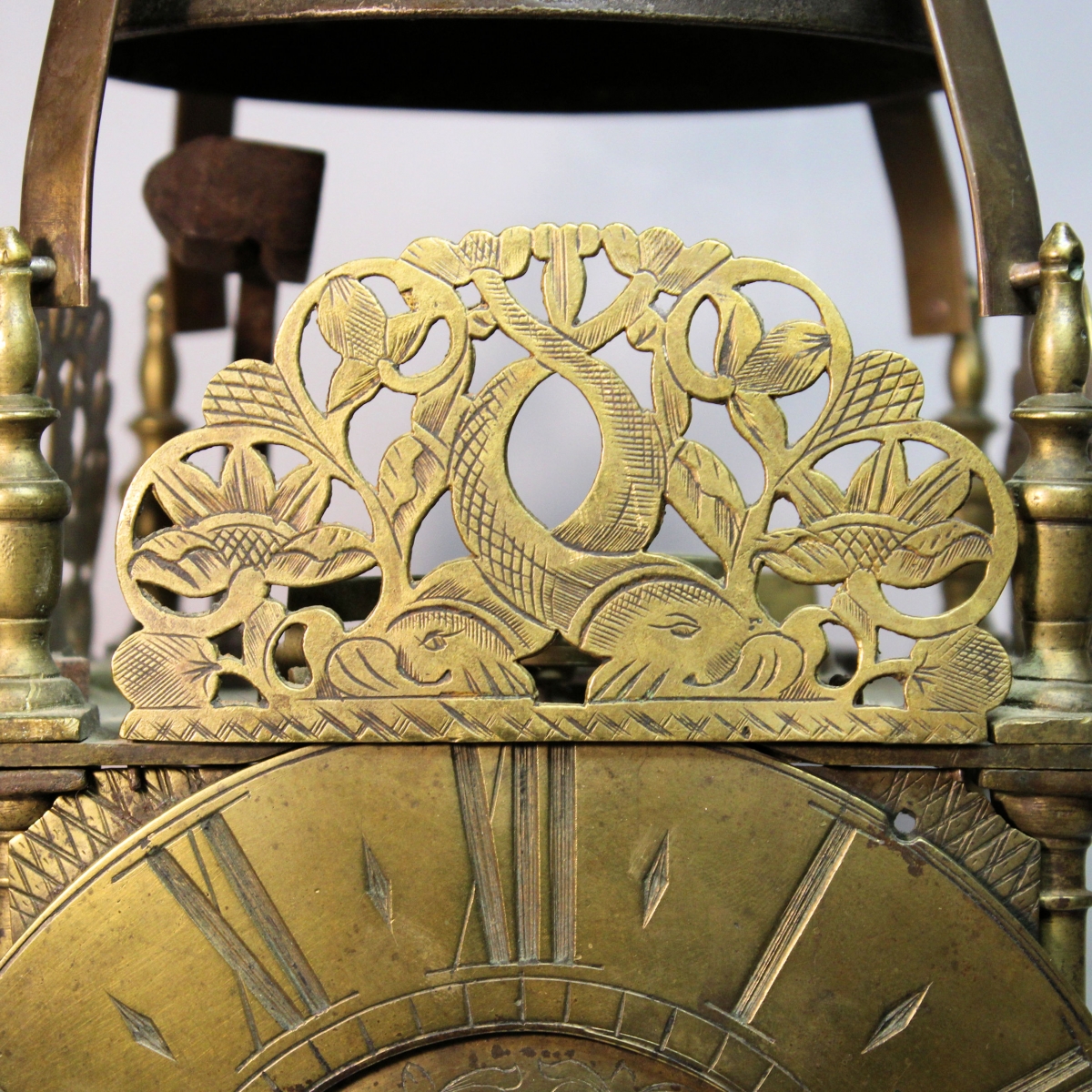
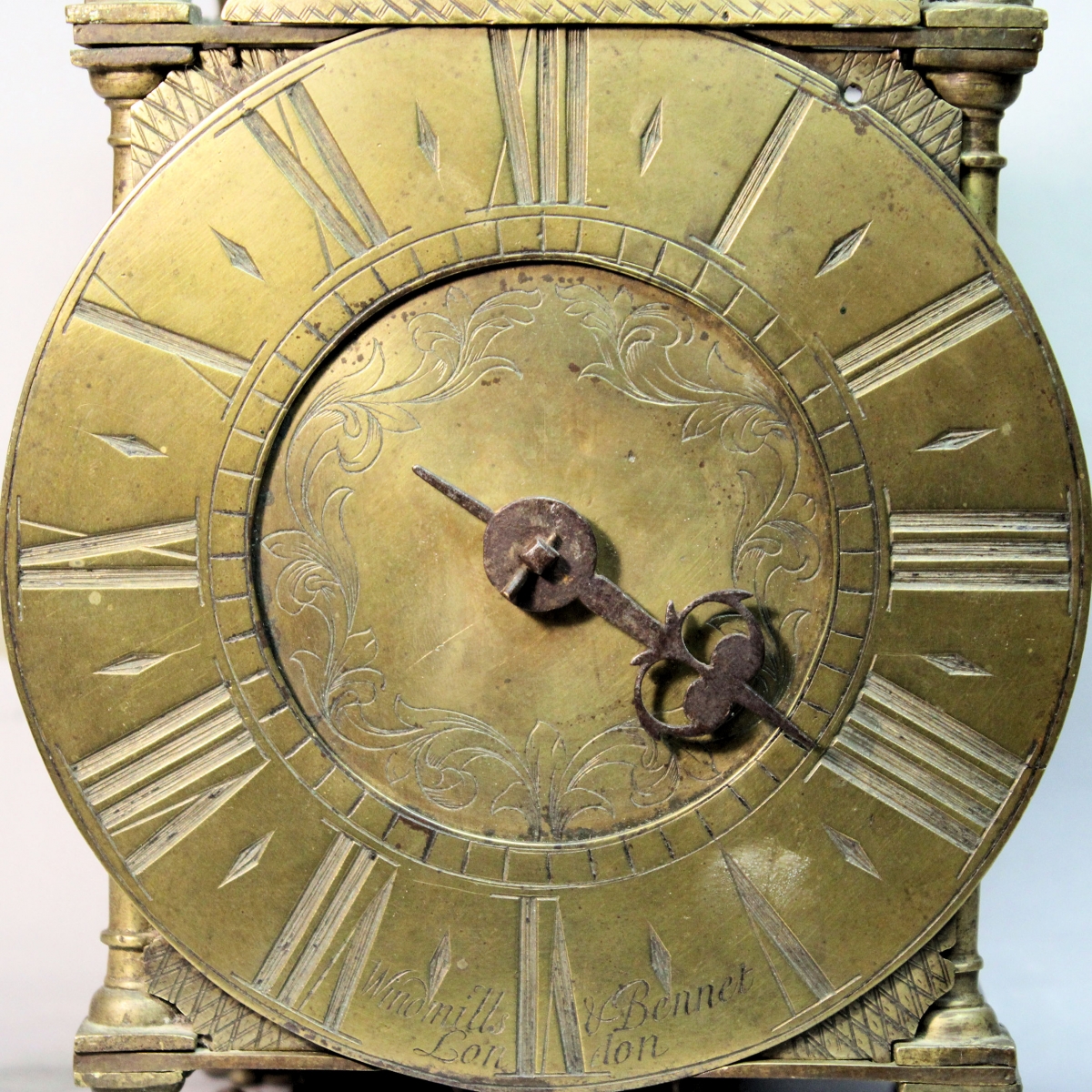
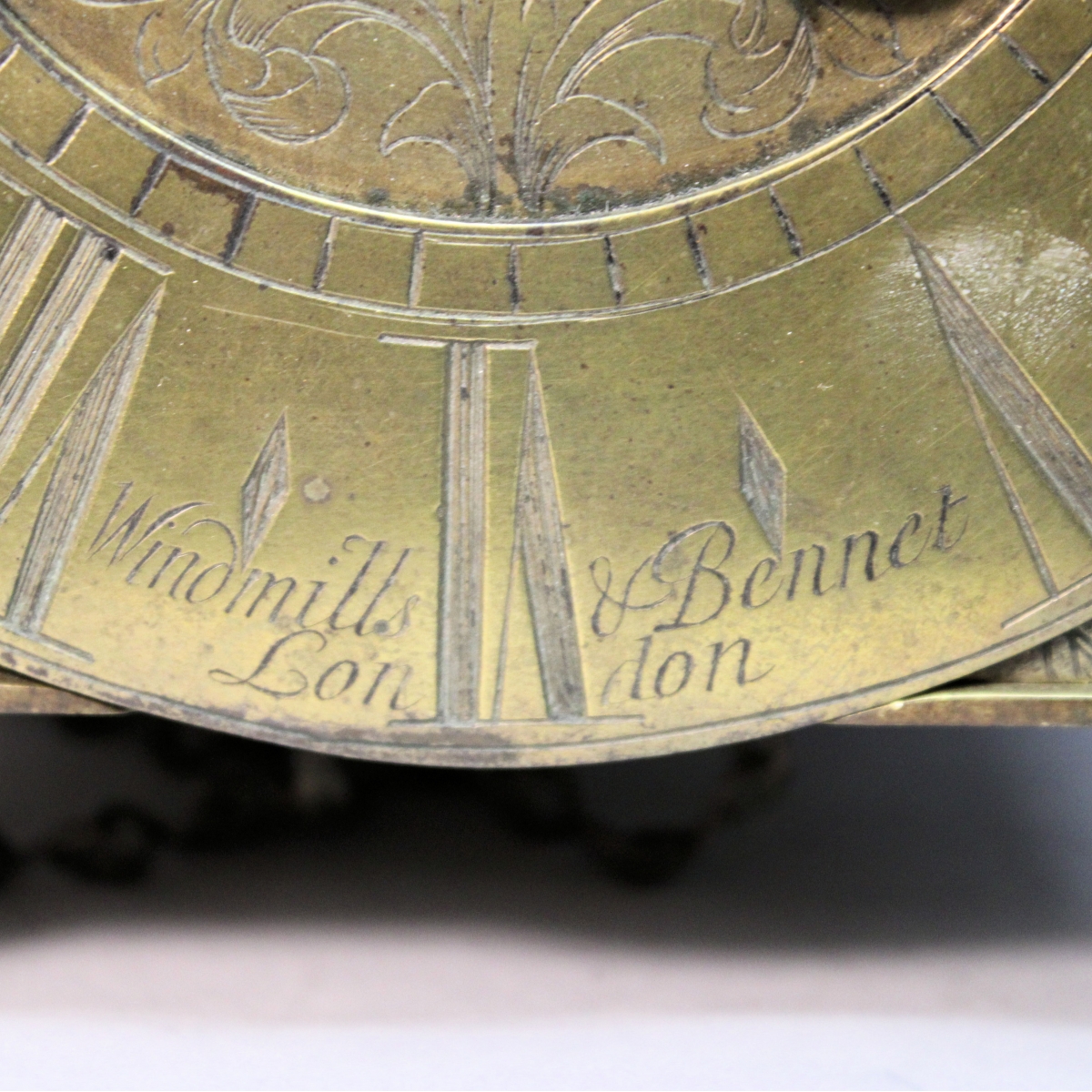
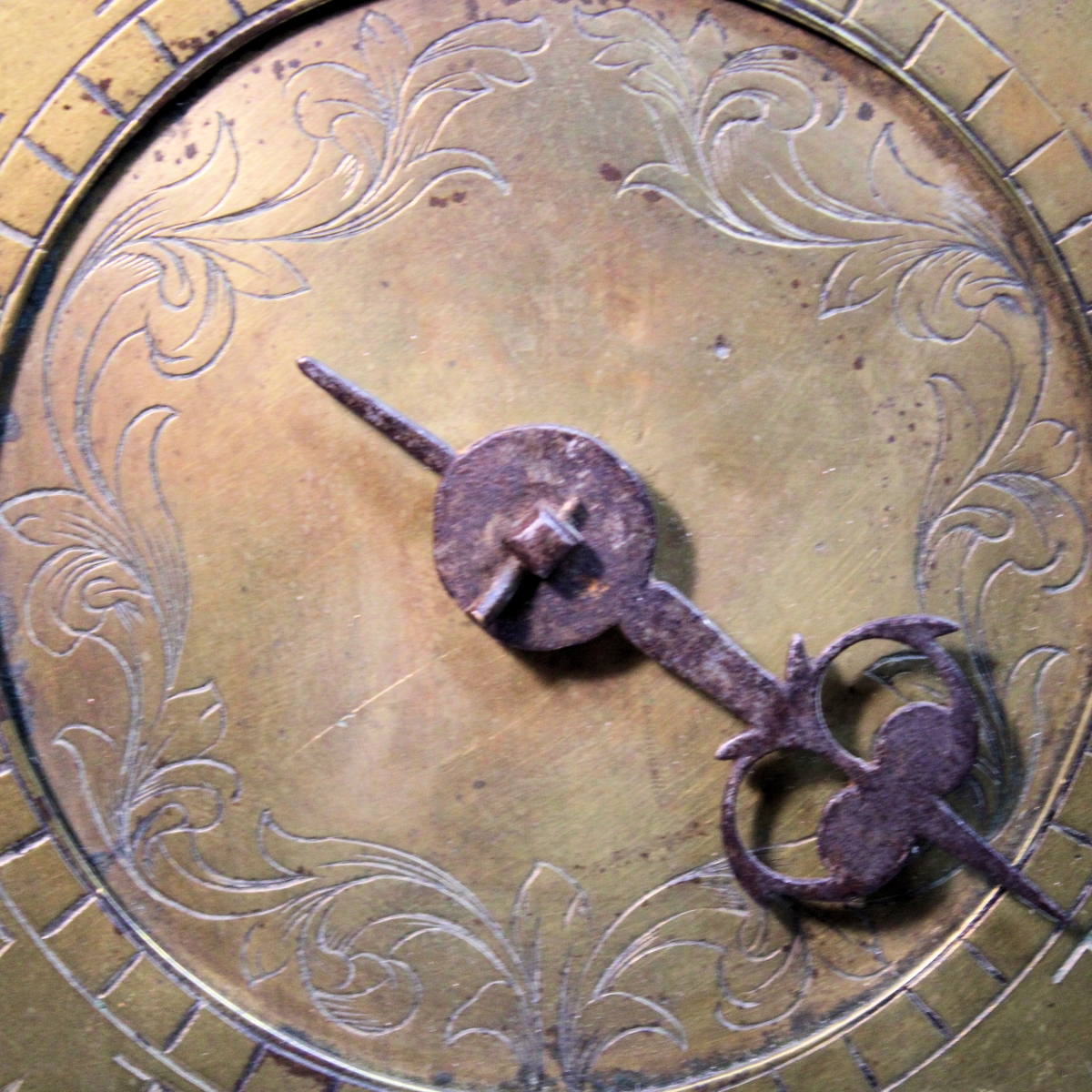
The 3 cast frets to the top are of 'dolphin' style and unusually, are all engraved. The 4 corner pillars are narrow and sit upon ball feet. The dial plate has engraving to the corners and centre with a blank area covered by an alarum setting disc (missing). The 6 1/2" diameter chapter ring has a ringed outer edge, Roman hour numerals, a divided and ringed inner, quarter track and diamond shaped half hour marks. The numeral VI is straddled with the maker's name of "Windmills & Bennet, London". The one-piece iron hand is tailed.
* Thomas Windmills (circa 1672 to 1737) was the son of the famous Joseph Windmills and was apprenticed to him in 1686. He became free of the Clockmaker's Company in 1695 and became a partner in his father's business about c.1700. He also became Master of the Clockmaker's Company in 1718. Thomas Bennet is said to have been in partnership with Windmills from 1720 until 1730. A tax assessment shows that in 1695, the Windmills family resided in the parish of All Hallows, Barking, by the Tower. Thomas died in 1737 and like his father, was buried at All Hallows, by the Tower. Unfortunately, the church has been destroyed.
It can't be overstated that the Windmills family were exceptional makers and it is believed that they collaborated with the likes of Tompion and Quare.
Dimensions: 14 3/4" high x 5 5/8" deep x 5 3/4" wide (top and bottom plates).
Circa: 1725.
Condition: The clock is dirty and dusty but surprisingly, shows very little signs of wear and
the wheel trains run very smoothly. The Verge escapement is well-set and runs
with a little thumb pressure - as does the striking train. The bell, carrier and top
finial are not original but every other part - even the square-headed top screws
appear totally original. All of the alarum work, setting disc, back plate, side
doors, weight and hoop and spikes are missing, probably broken off during a
fall from the wall which is so often the case. All of the brass has tarnished and
resembles bronze.
Price: £3,000 in it's present condition however, corrective work can be carried out if
required by the purchaser.
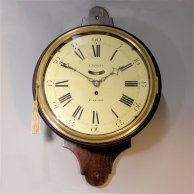
A 'Salt box' verge escapement, fusee, English dial wall clock by Upjohn of Exeter. Circa 1790.
View Details