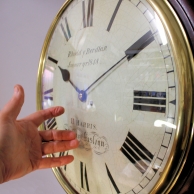
Epicyclic skeleton clock by Fred Whitlock. Copied from an original circa 1820 example by Messrs. Strutt and Wigston.
A fine and perfect replica of a rare clock from the famous, 'Major Heathcote collection'.
I feel that this is a very special clock that requires a unique description.
It is not only rare but has a fascinating back story that is of Horological interest and, as a Master Clockmaker - a 'supposed specialist', feel duty -bound to draw your attention to it. Please note, I know Fred Whitlock on a deeply personal level and have worked with him in collaboration many times over the past 25 years. He has shared his personal and Horological story with me and it is fascinating.
The substantially built, 6 day duration, line fusee movement with a light, Anchor Recoil escapement and scroll plates with chamfered edges. The fusee set-up is capped and the winding is from the rear (a necessity because of the epicyclic gearing). The bewildering detail taken in the manufacture of these pieces is an absolute testament to the quality of this copy which during it's concept, and with the premier clockmaking company of 'Dent', was a bold, time - consuming but commercially welcomed project. Yes, it proved very successful but also, the production of the specialised 'planetary gearing' threw up many difficulties.
This fine clock production proved to be a very difficult and limiting project during its original inception in circa 1820 and also, in its revival in circa 1973 - some 153 years later! It was a tall order and a difficult journey to produce in both eras - equally so for both craftsmen We should pay homage to their temerity and determination. Original and replica, both makers encountered equal difficulties in market and production difficulties. The inventor had less technical machinery but because of his fame as an inventor - had a ready market of wealthy customers. The copier, had modern machinery but sadly, even in 1973, it didn't work for producing the circular, saw - toothed shark - toothed epicyclic driving wheel! He eventually overcame this after many failed attempts but the procedure was breathtakingly and laborious, it required countless 'scrapings' of the teeth with a rigid cutter once they could be reliably 'indexed' within a solid captivity. Pre - C.N.C - this is mind-boggling work and commands my deepest admiration!
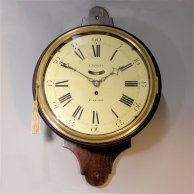
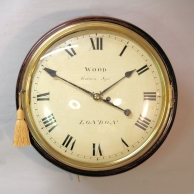
A 'Salt box' verge escapement, fusee, English dial wall clock by Upjohn of Exeter. Circa 1790.
View Details